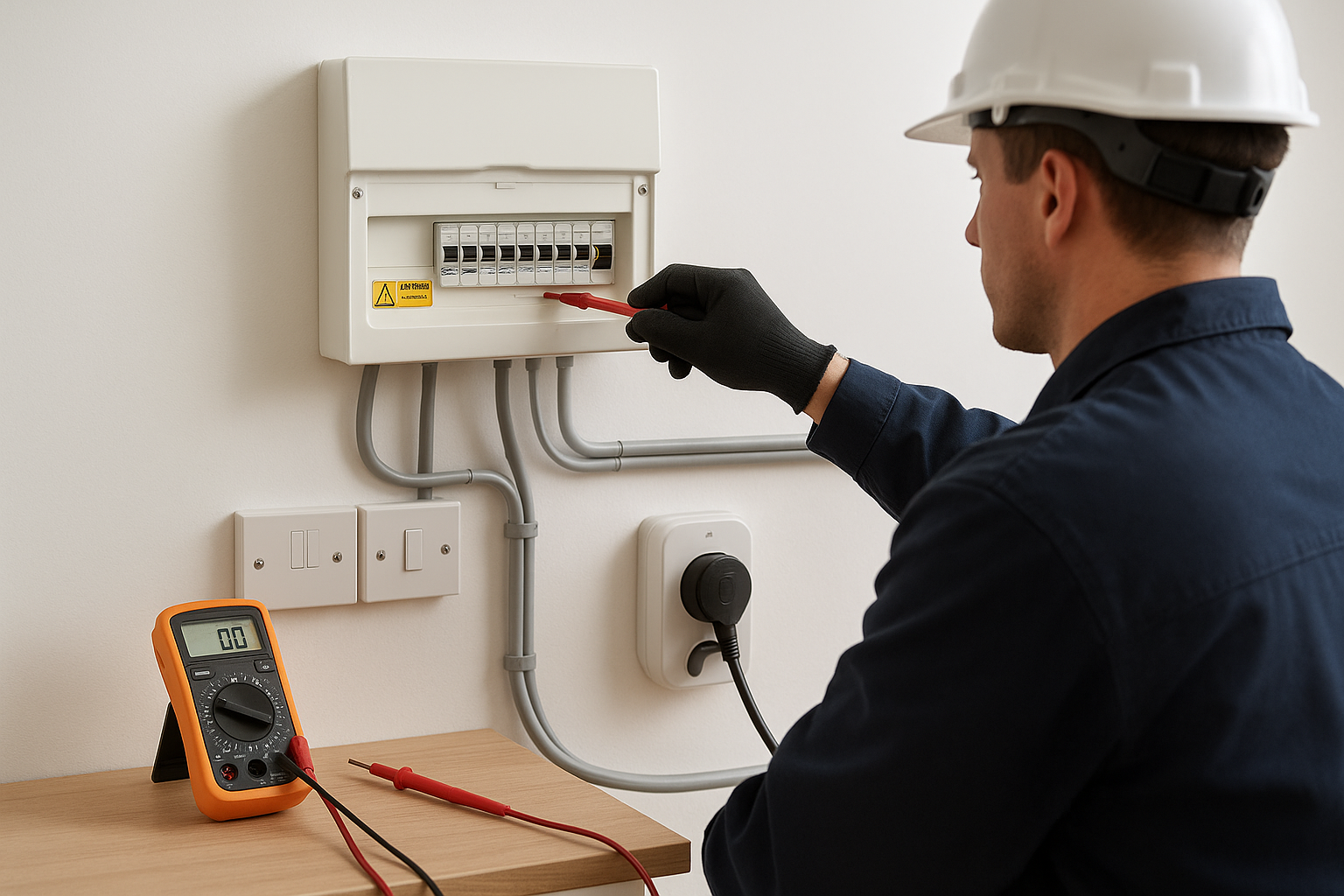
If your fuse box keeps tripping, a breaker will not reset, or you have lost power to part of the property, High Volt Electrics provides fuse box repair in Clapton for homes, flats, landlords, and local property managers. We work across Clapton and nearby areas including Hackney, Stoke Newington, Homerton, Leyton, and Dalston, helping identify the fault, make the installation safe, and advise on the next repair step.
Fuse box problems are often linked to overloaded circuits, damp, ageing cable, faulty appliances, or a consumer unit that has reached the end of its safe working life. In older Clapton properties, including Victorian terraces, converted flats, and older rewires, we often find a mixture of symptoms rather than one simple fault. That may mean a buzzing fuse board, repeated RCD trips, loss of sockets or lighting, or a breaker that drops out under normal use.
We are based at 10 Thistlewaite Rd, Lower Clapton, London E5 8DL, United Kingdom and provide 24-hour support for electrical faults. If you need a visit, call 020 3670 3396 or email info@claptonelectricians.co.uk. You can also view our business listing here: Google Business Profile.
Before any work starts, we look at the symptoms, the age and condition of the fuse board, the circuit layout, and anything nearby that may be affecting the installation, such as moisture, damaged sockets, or overloaded equipment. That approach matters in Clapton where you can see a wide mix of property types and electrical ages, from older domestic wiring to modern flats and small shops near Clapton Station, Chatsworth Road, Hackney Marshes, Millfields Park, and Lower Clapton Road.
If you are unsure whether it is a small fault or a serious safety issue, switch off the affected circuit at the consumer unit if you can do so safely, keep clear of any damaged parts, and arrange an electrician. If there is burning smell, heat, smoke, visible damage, or repeated tripping that will not clear, treat it as urgent.
Fuse Box Fault Finding in Clapton
Fuse box fault finding in Clapton is the right service when the problem is not obvious. A fuse box may trip because of a faulty appliance, a wiring fault, moisture entering a fitting, damaged cable, or a breaker that is no longer operating correctly. In many homes the issue shows up as one room losing power, a socket circuit going dead, or the whole board tripping after using a kettle, heater, washing machine, or oven.
Our fault-finding process starts with the symptoms you have noticed and the layout of the installation. We then inspect the fuse board, look for signs of overheating or loose terminations, and test the affected circuit to narrow down the source of the fault. If the installation is older, we also consider whether ageing cable, outdated protective devices, or previous alterations are contributing to the problem.
Common signs that point to fuse box fault finding include:
- Fuse box keeps tripping without an obvious reason
- Breaker will not reset after a trip
- Half the house has no power
- Buzzing, heat, or a burning smell from the fuse board
- Lights dimming or flickering when appliances start
- Intermittent power loss in sockets or lighting circuits
We have recently helped local customers with issues such as a replacement light fitting in Stoke Newington, an intermittent lighting fault in Homerton, and an emergency power loss callout in Leyton, where we identified the problem circuit and left the installation secure. That kind of hands-on fault tracing is often needed when the problem is not the fuse box alone, but the circuit feeding it.
Tripping Breaker Investigation in Clapton
Tripping breaker investigation in Clapton is often needed when the consumer unit trips repeatedly under everyday use. A breaker that trips is doing its job by protecting the circuit, but repeated trips usually mean something is wrong. The cause may be overloading, a failing appliance, moisture, damaged wiring, or a protective device that is too sensitive for the condition of the circuit.
In practical terms, we look at what was being used when the trip happened, whether the issue is linked to one room or the whole property, and whether the breaker trips immediately or after some time. That difference matters. An immediate trip can point to a short circuit or a direct fault. A delayed trip can suggest overload, heat build-up, or an intermittent fault that appears only when equipment is running for longer periods.
Overloading is common in homes where several high-demand appliances share the same circuit, especially in older properties that were not designed for today’s equipment load. In Clapton, that can show up in Victorian terraces, converted flats, and older rewires where the electrical system has been adapted over time. Modern flats and small commercial spaces can also suffer if too much equipment is plugged into one area or if a circuit has been altered without proper balancing.
Typical symptoms that justify a breaker investigation include:
- Breaker trips when the kettle, heater, or washing machine starts
- Breaker trips when multiple devices are used together
- Power returns briefly then drops again
- One appliance repeatedly causes the same circuit to fail
- Breaker feels stiff, damaged, or does not stay reset
If you are dealing with repeated tripping, avoid repeatedly resetting the breaker without finding the cause. That can mask a developing fault and increase risk. We can inspect the circuit, test the equipment involved, and advise whether the issue is repairable on-site or whether a larger upgrade is needed.
RCD Nuisance Tripping in Clapton
RCD nuisance tripping in Clapton is common where the installation is old, where there is moisture, or where several appliances create small earth leakage currents that add up. An RCD is designed to trip when it detects a fault that could make the installation unsafe, but nuisance tripping is frustrating and can leave you without power to key areas.
People often notice this problem after rain, in kitchens, bathrooms, utility rooms, or properties with external lighting and sockets. Damp can enter through damaged fittings, poor seals, outdoor accessories, or hidden cable routes. In older buildings, the problem may also be linked to insulation breakdown in ageing cable or to circuits that have never been fully tested after alterations.
We look for the cause rather than simply changing the device. That means checking the circuit condition, isolating likely loads, and testing whether the issue comes from a specific appliance, a section of wiring, or the consumer unit itself. In some cases the answer is straightforward. In others, nuisance tripping is a warning that the circuit needs more detailed electrical fault finding or remedial work.
Watch for these RCD-related warning signs:
- RCD trips after rainfall or in damp weather
- RCD trips when particular appliances are plugged in
- RCD trips more often in bathrooms, kitchens, or outdoor circuits
- Intermittent tripping with no clear pattern
- Moisture marks, corrosion, or heat around the fuse board
If damp is suspected, it is important not to ignore the issue. Keep clear of the affected equipment, switch off the circuit if safe, and arrange a visit. Damp-related faults can worsen quickly and may affect nearby locations in the building, not just the obvious room.
Faulty Breaker Replacement in Clapton
Faulty breaker replacement in Clapton may be needed when a breaker has become unreliable, physically damaged, or unable to reset properly after the underlying fault has been dealt with. A breaker should not be replaced just because it trips; it should be replaced when testing shows the device itself is no longer working as it should, or when the board condition makes replacement the safer option.
We assess the breaker in context with the rest of the consumer unit. If the board is old, heat-damaged, corroded, or fitted with outdated equipment, replacing one device may not solve the wider issue. In some homes and flats, especially older rewires or properties with a mix of old and new circuits, it can be more sensible to discuss consumer unit work rather than isolated parts replacement.
Where a breaker replacement is appropriate, we will explain the likely cause, confirm the circuit is safe to re-energise, and advise on any follow-up testing needed. If the fault has affected sockets, lighting, or fixed equipment, we can also help with related electrical repairs and domestic electrician support.
Faulty breaker replacement may be considered when:
- The breaker will not reset even after the fault is cleared
- The breaker shows signs of heat damage or wear
- The breaker trips unpredictably without a circuit fault being found
- There is physical damage to the consumer unit components
- The board condition suggests a wider upgrade is safer
Some consumer unit or circuit alterations may be notifiable under Part P of the Building Regulations, and certification may be required depending on the work involved. If that applies, we will discuss it before the job proceeds.
Fuse Board Safety Checks in Clapton
Fuse board safety checks in Clapton are useful when you want reassurance after a fault, before a tenancy changeover, after water ingress, or when an older installation is starting to show signs of age. Safety checks are especially important in properties where the fuse board is old, where the wiring has been modified over time, or where there is evidence of overload or damp.
During a safety check we review the condition of the board, look for signs of overheating, loose connections, corrosion, and poor circuit labelling, and test the operation of protective devices. We also consider whether the installation is suitable for the property’s current use. A flat or house that once had modest electrical demand may now be supporting more appliances, IT equipment, electric heating, or garden power.
Landlords and property managers often request safety checks after reports of tripping, loss of power, or visible wear. Tenants may request them when they notice buzzing, heat, or repeated outages. Homeowners often book a check after moving into a property near Clapton Station, Chatsworth Road, or the surrounding streets, especially where the wiring age is unclear.
Useful reasons to book a fuse board safety check include:
- Old fuse wire board still in service
- Repeated trips in a property with multiple occupants
- Renovation planning or appliance upgrades
- Evidence of damp near the consumer unit
- Concerns about ageing cable or previous DIY alterations
If we find that the board is operating safely but the installation is under strain, we will explain practical options such as load reduction, circuit repairs, or further inspection. If the board is not suitable for continued use, we will advise on the next step rather than leaving you with guesswork.
High Volt Electrics supports domestic and commercial customers across Clapton and nearby areas with fuse box repair, fuse box fault finding, tripping breaker investigation, RCD nuisance tripping, faulty breaker replacement, fuse board safety checks, lighting installation, socket installation, electrical repairs, and emergency electrician callouts. Our aim is to identify the fault clearly, make the installation safe, and give straightforward advice based on what we find on site.
If you are dealing with a fuse box fault in Clapton, especially one involving overloading, damp, ageing cable, or urgent signs such as heat, smell, smoke, or loss of power, call 020 3670 3396 or email info@claptonelectricians.co.uk. We can attend 24 hours a day and help you decide whether you need repair, replacement, or further electrical fault finding.
Call 020 3670 3396 or request a visit today.